
It’s completely natural to feel a bit of “eye anxiety” when you wake up with a painful, red bump on your eyelid. Your first thought—beyond how to get rid of it—is often whether you need to isolate yourself from family or stay home from work to protect others. At Urban Optique & Eyecare in Chandler, AZ, we believe that understanding the “why” behind eye conditions is the best way to manage both your health and your daily schedule.
Styes are not contagious in the traditional sense and don’t spread from person to person like viral infections. The bacteria that create styes already live naturally on your skin, so you can continue your normal activities without worrying about infecting others.
What You Need to Know About Stye Transmission
Styes develop when bacteria that normally live on your skin get trapped inside blocked oil glands in your eyelids. These bacteria don’t jump from one person to another through casual contact or conversation. You can talk to people, work in the same office, or sit next to someone without any risk of transmission.
Styes are very different from highly contagious conditions such as viral pink eye, which spreads quickly in schools and offices. When you have a stye, you don’t need to isolate yourself or avoid social situations.
Common Myths About Stye Contagion
Many people worry that they caught their stye from someone else or that they need to stay home from work. These concerns stem from confusion with other eye conditions that are easily spread.
You can’t catch a stye by looking at someone who has one, shaking hands, or being in the same room. The bacteria involved already exist on your own skin and only become problematic when they multiply in the right conditions.
When Bacterial Transfer Can Happen
While styes themselves aren’t contagious, sharing certain personal items can transfer bacteria that might contribute to eye problems. Avoid sharing pillowcases, towels, or washcloths if they are contaminated with discharge.
Eye makeup and applicators pose the biggest risk for bacterial transfer. Using someone else’s mascara or eyeliner can introduce new bacteria to your eye area, potentially creating conditions that favor stye development.
How Styes Form & What Makes Them Happen
Your eyelids contain tiny oil glands that help keep your eyes moist and comfortable. When these glands get blocked by dead skin cells, makeup residue, or other debris, the natural bacteria on your skin can multiply in this enclosed space. Dry eye syndrome can sometimes contribute to eyelid problems when oil glands don’t function properly.
Your immune system recognizes this bacterial buildup as a problem and sends white blood cells to fight the infection. The subsequent immune response creates the pus and swelling you see in a fully developed stye.
External vs Internal Styes
External styes appear as red, tender bumps near your eyelashes and are usually easier to see and treat. Internal styes develop deeper inside your eyelid tissue and may feel like a hard lump when you touch the area.
Both types respond well to warm compress treatments applied for 10 to 15 minutes several times daily. The heat helps soften blocked material and encourages natural drainage.
Spotting Early Signs & Symptoms
Before you can see any visible bump, you’ll often feel a tender spot along your eyelid that becomes increasingly uncomfortable. The early stage is the perfect time to start warm compress treatments.
Your eyelid may feel swollen or heavy, even when nothing obvious appears in the mirror. You might also notice increased tearing or sensitivity to bright lights as your eye responds to the developing infection.
When Styes Are Fully Developed
A mature stye appears as a red, painful bump with a yellow or white center filled with pus. The surrounding skin feels warm to the touch and may appear stretched or shiny due to swelling beneath.
You’ll likely notice crusty discharge along your eyelash line, especially in the morning after sleeping. This discharge is your body’s way of clearing the infection naturally.
Risk Factors & Prevention Steps
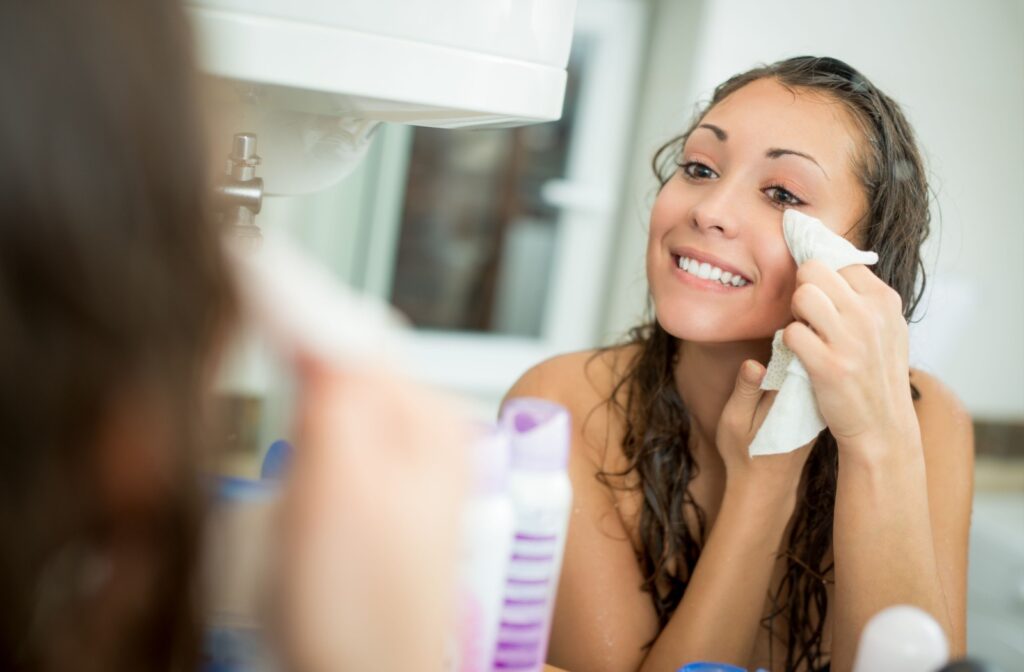
Touching your eyes with unwashed hands throughout the day introduces additional bacteria to an already sensitive area. This habit significantly increases your chances of developing styes and other eye irritations. Healthy eye habits can help you avoid many common eye problems.
Sleeping in makeup clogs your pores overnight, when your eyes should be recovering from daily exposure to dust, pollen, and other irritants. Remove all eye makeup before bed to allow your eyelids to function normally.
Health Conditions That Increase Stye Risk
Blepharitis causes ongoing inflammation along the eyelid margins, making it easier for oil glands to become blocked and infected, and it requires ongoing management to prevent recurring styes.
Rosacea affects how your oil glands function and can lead to more frequent blockages. Diabetes impacts your immune system’s ability to fight off bacterial infections, including those that develop in your eyelids.
When to See an Eye Doctor
Contact an eye care professional if the swelling makes it difficult to open your eye normally or if your vision becomes affected. These symptoms suggest the infection may be spreading beyond the original oil gland. Emergency eye care becomes important when symptoms worsen rapidly.
Pain that worsens despite consistent home treatment over several days indicates you may need prescription medication or professional intervention. A fever with your stye symptoms requires immediate medical attention.
Treatment Options Available
Antibiotic eye drops or oral medications can help clear stubborn infections that don’t respond to warm compresses alone. Some situations may benefit from steroid injections to reduce significant swelling quickly.
When styes don’t drain naturally, professional drainage under local anesthesia provides immediate relief and faster healing. This minor procedure is performed in the office and typically resolves the problem completely.
Check In with Urban Optique & Eyecare
At Urban Optique & Eyecare in Chandler, AZ, the experienced team can evaluate your stye symptoms and recommend the most appropriate treatment for your specific situation. Contact the office today to schedule an evaluation and relieve your eye discomfort.